
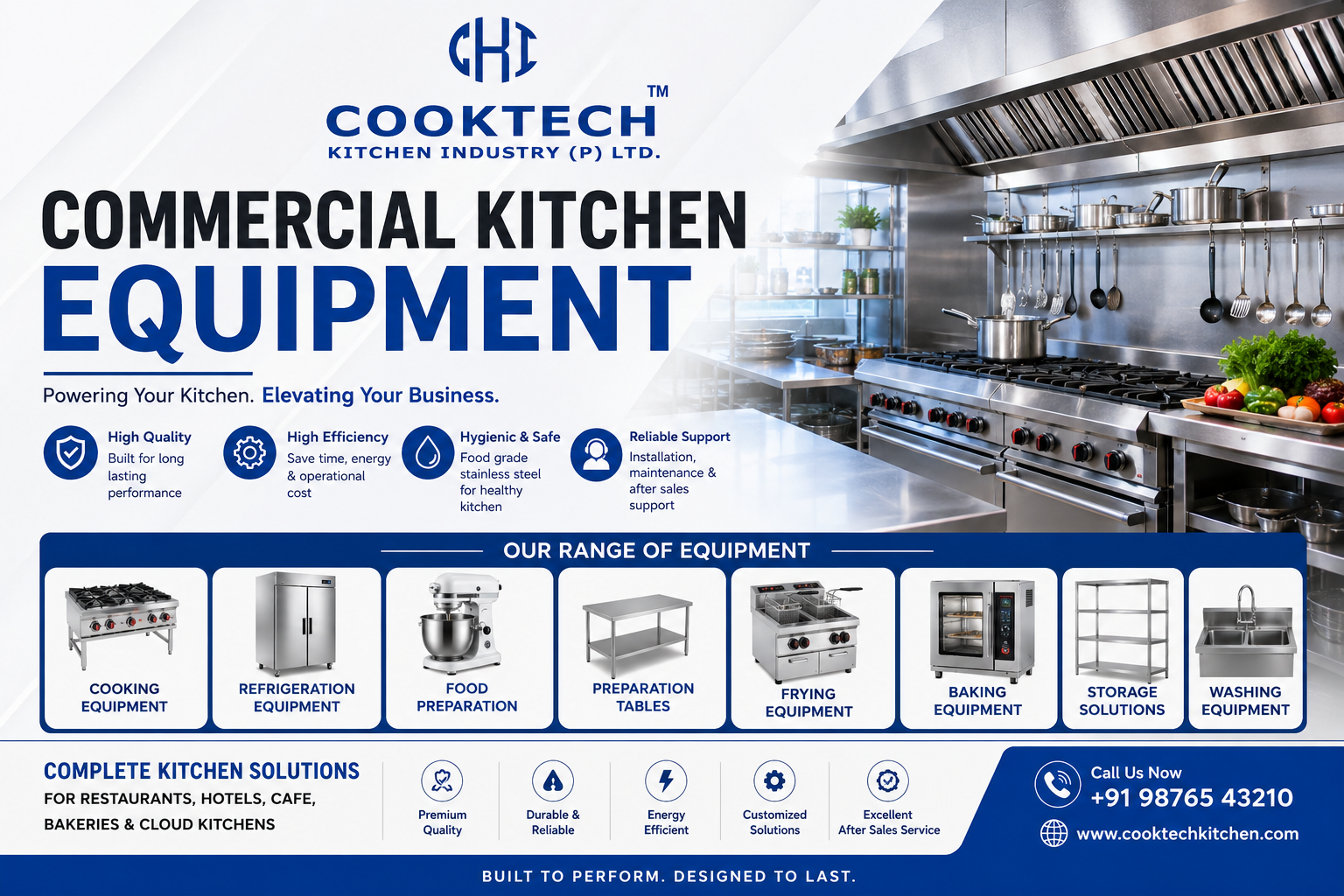
A successful restaurant or food business depends on more than great recipes. The right commercial kitchen equipment helps improve efficiency, maintain food quality, and create a smooth workflow. Whether you run a restaurant, hotel, café, bakery, cloud kitchen, or catering business, investing in reliable equipment can make daily operations faster and more organized.
Here are the top 10 commercial kitchen equipment every professional kitchen should consider.
1. Cooktech Kitchen Industry
A Cooktech Kitchen Industry is the heart of every kitchen. It allows chefs to prepare multiple dishes at the same time and is available in different burner configurations to suit small and large kitchens. A high-quality cooking range ensures even heat distribution and reliable performance during busy hours.
2. Commercial Oven
Commercial ovens are essential for baking, roasting, grilling, and reheating food. Depending on your menu, you can choose from convection ovens, deck ovens, combi ovens, or pizza ovens. A good oven delivers consistent cooking results while saving time and energy.
3. Deep Freezer and Refrigerator
Fresh ingredients are the key to delicious food. Commercial refrigerators and deep freezers keep vegetables, dairy products, meat, seafood, and frozen items at safe temperatures. Proper refrigeration helps reduce food waste and supports hygiene standards.
4. Exhaust Hood and Ventilation System
Cooking generates smoke, heat, grease, and steam. An efficient exhaust hood removes unwanted fumes, improves air quality, and creates a comfortable working environment for kitchen staff. It also helps maintain cleanliness and safety.
5. Stainless Steel Work Tables
Preparation work becomes much easier with stainless steel work tables. They are durable, rust-resistant, easy to clean, and provide enough space for chopping, mixing, and assembling dishes. Their hygienic surface makes them a preferred choice in commercial kitchens.
6. Food Preparation Equipment
Modern food preparation equipment such as vegetable cutters, food processors, dough kneaders, mixers, slicers, and meat mincers reduces manual work and improves productivity. These machines help maintain consistency while saving valuable preparation time.
7. Commercial Fryer
Restaurants serving snacks, fried chicken, French fries, or fast food rely heavily on commercial fryers. They maintain consistent oil temperatures, cook food evenly, and produce crispy results even during peak business hours.
8. Dishwashing Equipment
Maintaining cleanliness is just as important as cooking. Commercial dishwashers clean utensils, plates, glasses, and cookware quickly while using less water than manual washing. They help maintain hygiene and reduce labor costs.
9. Storage Shelving and Racks
Proper storage keeps ingredients and kitchen tools organized. Stainless steel racks and shelving units maximize storage space while making it easier for staff to access supplies. Organized storage also supports food safety and efficient inventory management.
10. Cold Display and Serving Equipment
For bakeries, cafés, restaurants, and food courts, display counters and serving equipment help keep food fresh while presenting it attractively. They improve customer experience and encourage impulse purchases.
How to Choose the Right Commercial Kitchen Equipment
Before purchasing equipment, consider the size of your kitchen, menu requirements, customer volume, energy efficiency, available space, and maintenance needs. Investing in durable, high-quality equipment may cost more initially, but it offers better performance and lower operating costs in the long run.
Final Thoughts
The right commercial kitchen equipment forms the backbone of every successful food business. From cooking and food preparation to refrigeration, cleaning, and storage, each piece of equipment contributes to a faster, safer, and more productive kitchen. By selecting reliable equipment that matches your business needs, you can improve efficiency, maintain consistent food quality, and create a kitchen that supports long-term growth.