A restaurant’s success depends not only on taste and service but also on how efficiently the kitchen operates. Behind every perfectly cooked dish is a well-planned setup of restaurant kitchen equipment that supports speed, hygiene, and consistency.
Whether it’s a small café, fine-dining restaurant, or a large hotel kitchen, the right equipment ensures smooth operations and better customer satisfaction.
What is Restaurant Kitchen Equipment?
Restaurant kitchen equipment refers to all the tools, machines, and appliances used in a professional food preparation environment. Unlike home kitchens, these are designed for heavy-duty, continuous use and high-volume cooking.
From cooking and refrigeration to preparation and cleaning, every section of the kitchen depends on specialized equipment.
Importance of Restaurant Kitchen Equipment
A well-equipped kitchen helps restaurants run efficiently during busy hours. It reduces preparation time, improves food quality, and ensures consistent taste.
Key benefits include:
- Faster food preparation
- Better hygiene and safety
- Reduced workload for staff
- Consistent cooking results
- Smooth kitchen workflow
In a competitive food industry, efficiency directly impacts customer satisfaction and business growth.
Essential Restaurant Kitchen Equipment
Every restaurant kitchen needs a combination of basic and advanced equipment depending on its menu and scale of operations.
Cooking Equipment
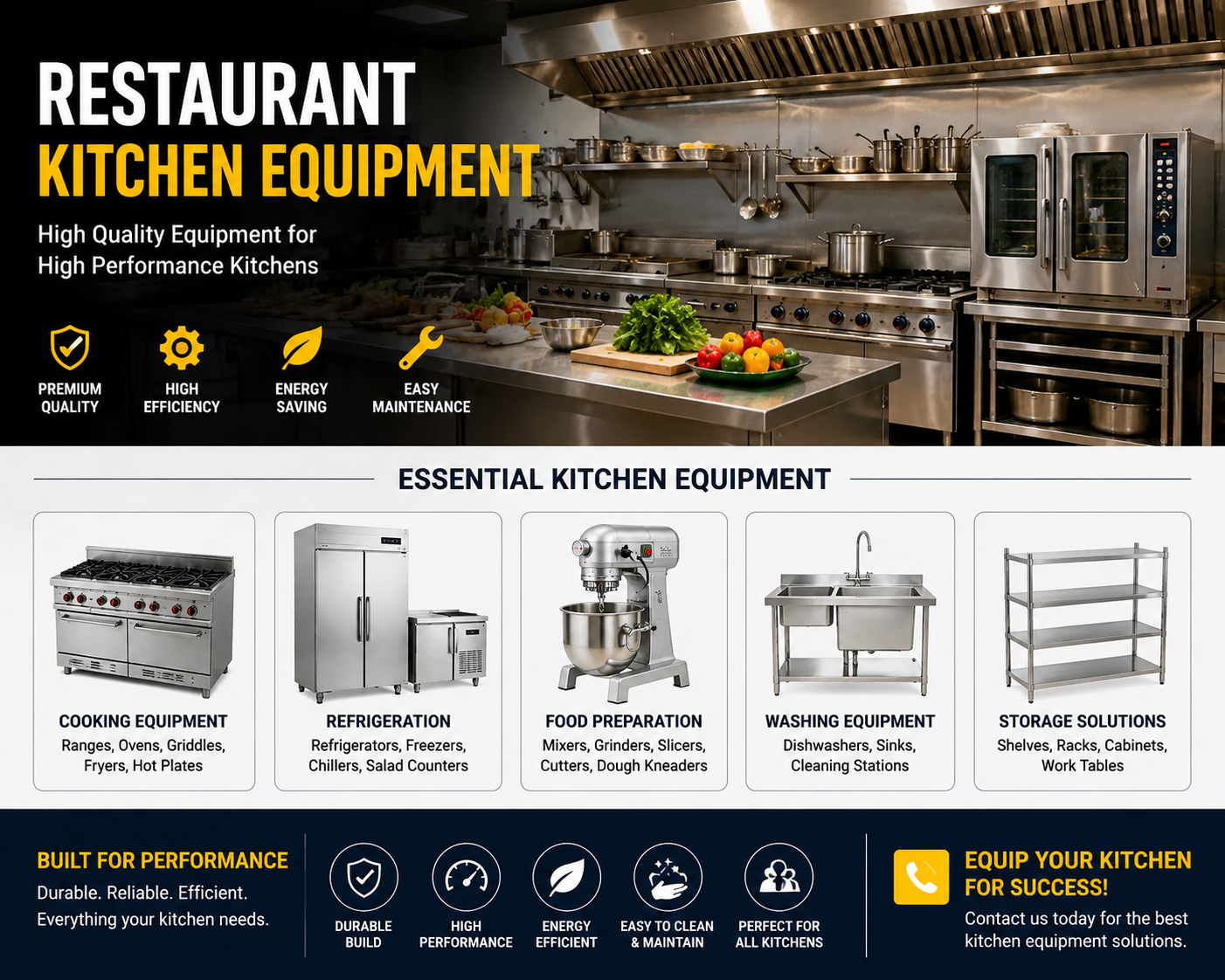
This forms the heart of any kitchen. It includes gas ranges, ovens, tandoors, fryers, grills, and induction cooktops. These machines are built for continuous use and precise cooking control.
Refrigeration Equipment
Proper storage is critical for food safety. Commercial refrigerators, deep freezers, and cold storage units help preserve ingredients for longer periods without spoilage.
Food Preparation Equipment
To speed up prep work, restaurants use mixers, grinders, slicers, dough kneaders, and vegetable cutters. These tools reduce manual effort and increase consistency.
Washing and Cleaning Equipment
Hygiene is a top priority in every kitchen. Dishwashers, stainless steel sinks, and cleaning stations help maintain cleanliness and meet safety standards.
Storage Equipment
Shelving units, racks, and stainless steel cabinets keep the kitchen organized and make ingredients easily accessible.
How Equipment Improves Kitchen Efficiency
Efficient kitchen equipment reduces delays and helps staff manage high-order volumes smoothly. Proper workflow design ensures that cooking, preparation, and plating areas are well connected.
With the right setup, chefs can focus more on quality and presentation instead of struggling with outdated tools.
Hygiene and Safety in Commercial Kitchens
Food safety is essential for every restaurant. Modern equipment is designed with easy-to-clean surfaces, especially stainless steel, which prevents contamination and supports hygiene standards.
Proper refrigeration and cooking equipment also help maintain safe temperatures, reducing the risk of food spoilage and health issues.
Choosing the Right Restaurant Kitchen Equipment
Selecting the right equipment depends on several factors:
- Type of restaurant and menu
- Kitchen size and layout
- Daily customer volume
- Energy efficiency and durability
- Maintenance requirements
Investing in high-quality equipment ensures long-term savings and better performance.
Modern Trends in Kitchen Equipment
Today’s restaurant kitchens are becoming more advanced and efficient. Some modern trends include:
- Energy-efficient appliances
- Smart temperature control systems
- Modular kitchen setups
- Space-saving compact equipment
- Automation in food preparation
These innovations help restaurants improve speed and reduce operational costs.
Conclusion
Restaurant kitchen equipment is the foundation of every successful food business. It improves efficiency, maintains hygiene, and ensures consistent food quality.